Back patios
A stamped patio gives you the look of slate, stone or brick in one piece, and the release leaves a darker tone in the grooves so the pattern reads from across the yard.
Got a plain or cracked patio, walk or drive? We pour and stamp a new slab in the pattern you pick, over a packed base.
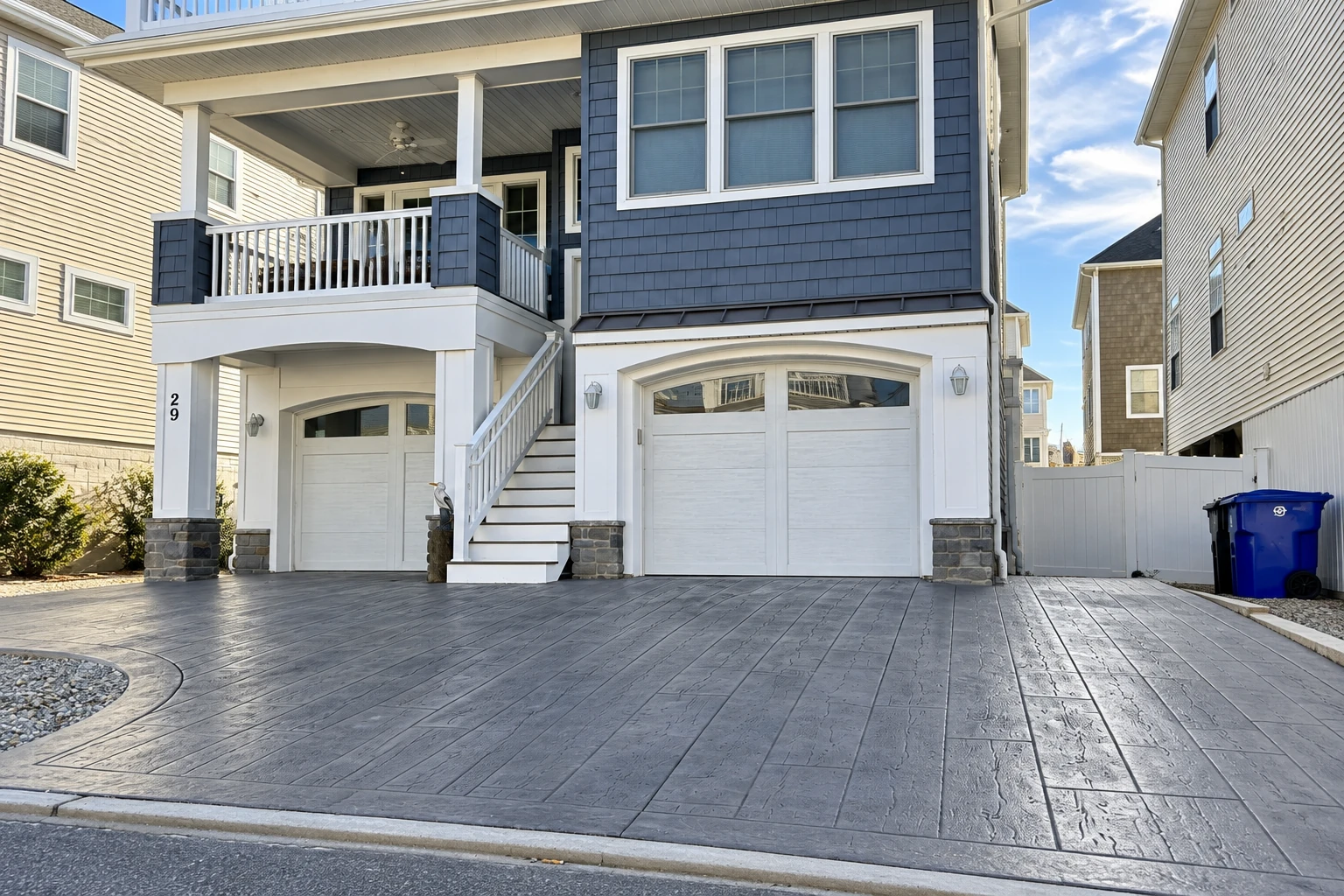
Stamped concrete is a new slab with a pattern pressed into it while it's still soft, and in Hermiston we use it for patios, walks and driveways that look like stone, slate or brick but pour in one piece. A release powder or liquid keeps the mats from sticking and leaves a second color in the grooves, which is what makes the pattern stand out.
Most people who call us have an old slab that's cracked or sinking, or a plain one they're tired of, and since stamping only happens in fresh concrete, the old one comes out and we pour new. The price mostly turns on the size of the area, how much digging and base work it needs, the pattern and colors you pick and whether the slab meets the sidewalk or street, which brings in city rules. The schedule turns on the weather, because stamping needs the right kind of day, and on the rinse and seal that come after the pour. I'll walk the job, measure it and write up what it needs. We're based in Hermiston and work in Umatilla, Pendleton, Kennewick and other cities around the area.
I walk the job, measure it and write the estimate myself. My crew does the work and I run it on site, so the person who quoted it is there for the pour.
If the budget's tight, I'd rather trim the pattern than the base, because a nice finish on dirt that settles still cracks and sinks, and nobody can fix what's underneath once it's poured.
I learned concrete on a city crew pouring curb and sidewalk that had to pass a public inspector, and I've run this business in Hermiston since 2017.
Stamping runs on the concrete's clock, so I pick a pour day that gives the crew time to get the pattern in right before the surface sets up. Ahead of that, we dig out to firm ground, pack the subgrade, which is the dirt and gravel the slab sits on, and set the forms so water runs away from your house. We set rebar, the steel that keeps cracked pieces from pulling apart, then pour, put down the release and press the mats in while the concrete is soft, with the crew working from outside the forms or standing on the mats. We cut control joints, shallow grooves that give the slab a place to crack where we chose and not across your pattern. Once it's hard enough to walk on without marking it, we come back and rinse off the extra release, and the cure-and-seal, a coat that holds moisture in while the concrete gains strength, goes on after that rinse water dries. So plan on the job running past pour day, and I'll show you how to keep an eye on the sealer after that.
A stamped patio or entry often ties into other flatwork. If you want a plain walk out to the street with a stamped border, or a new run of sidewalk along the front, that's our concrete sidewalk building work. When a stamped driveway runs up to the garage, we usually leave the pattern outside and pour a smooth slab inside as part of our garage floor concrete work.
A stamped patio gives you the look of slate, stone or brick in one piece, and the release leaves a darker tone in the grooves so the pattern reads from across the yard.
A stamped walk or entry landing dresses up the front of the house without much square footage, which makes it an easy place to try a pattern before doing a bigger area.
Stamping a border or a few bands across a broom-finished driveway, the light texture that gives tires and shoes grip, puts the pattern where people see it as they walk up.
Because the pattern goes into fresh concrete, we can't stamp the slab you have now. A cracked or sinking patio comes out, we fix what's under it, and the new one gets stamped.
Send the form and we'll get back to you within one business day to set a time. I'll come out, walk and measure the job and write up what it needs, free and with no pressure to book.
A paced-off length and width is plenty. It tells me how much base work and concrete we're talking about before I come out, so the visit goes quicker.
Tell us if the slab runs to the sidewalk, street or ditch, because work there brings in a city permit and its own rules, and we'd rather plan for that early.
Stamping needs the right weather, so knowing whether you're after a spring patio or a fall walk helps us find a pour day that suits the concrete and your plans.
Photos of stamped patterns, colors, borders and plain flatwork to help you pick a look we can talk through at the estimate.
Straight answers on cost, pour timing, winter wear, upkeep, permits and licensing for a stamped concrete job in Hermiston.
Your price comes from the estimate, because it turns on the size of the area, the base work it needs, the pattern and the number of colors. A fully stamped slab runs more than a stamped border around a broom-finished one, and work that meets the street adds a city permit. Call or send the form and I'll come measure it.
Pour on a day that isn't hot, windy or very dry, because those conditions pull water from the surface of fresh concrete and shorten the window for stamping. When the date can't move, an early morning or late evening pour is the practical choice. We set the pour day with that in mind and talk through your timing at the estimate.
It holds up best when you ask for air entrainment, tiny bubbles mixed into the concrete that give freezing water room to expand. Industry guidance calls it one of the most important features to request for new concrete where it freezes and thaws, and the time to ask is while the mix is being planned. We go over the mix before the pour.
Check the sealer once a year, because it wears down over time, especially on driveways and walks. When water stops beading or the slab darkens fast when it gets wet, it may be time to reseal. Keep deicers off it the first winter and use them in moderation after that. It's backed by our promise, satisfaction guaranteed on every job.
Yes, if the work touches the street, sidewalk, shoulder or ditch, the City of Hermiston requires a right-of-way permit, and driveway repairs or additions count. The $50.00 permit needs a traffic control plan and site drawing. Approaches must meet city Public Works standards, and a lot with 60 feet of frontage or less is allowed only one. We handle the permits our part calls for.
Yes. Oregon law generally requires anyone paid for construction work that improves real property to be licensed, and concrete is one of the state's examples. We're licensed and insured. If you plan to do street-side work yourself, the city lets a homeowner take out the right-of-way permit, but depending on the job it advises hiring a contractor because of the rules and specifications involved.
Call (458) 219-6758 or send the form now, so the mix, the permit and the pour day are all settled before the crew shows up.