
From the driveway to the door
This is the walk everyone uses, so we set it to meet the driveway and the front step at even heights, with no lip for someone to catch a toe on.
Old walk heaved, cracked or holding water? We build a new one on dug-out, packed ground so it stays level and sheds water.
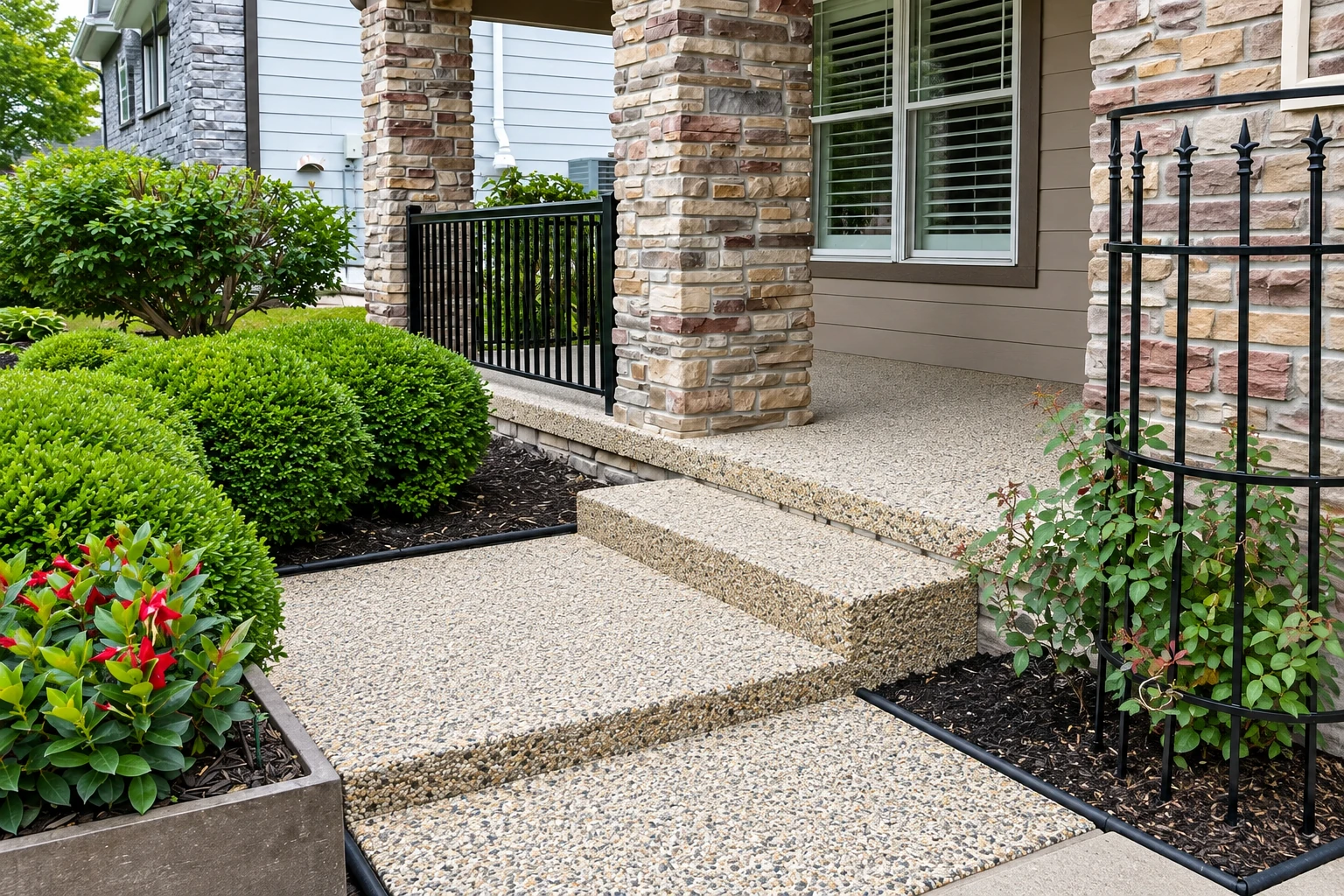
Concrete sidewalk building in Hermiston, OR means digging out the soft ground, packing a solid base, then pouring and finishing a walk that stays level, drains away from your house and gives your feet good grip for years.
Most calls start with a walk that's heaved, cracked or holding water, or a yard with a worn dirt path where a walk should be. The price turns on how long and wide the walk runs, whether old concrete has to be broken out and hauled off, how much soft ground comes out and how many spots get built heavier for cars. The schedule turns mostly on the weather and the cure, plus city paperwork if the walk runs along the street. I measure the route when I come out and write up what yours needs, so the number you get is for your walk and nobody else's.
I learned concrete on a municipal crew, pouring curb and sidewalk that had to pass a public inspector, so a walk is work I know from the ground up.
I care most about the prep, the joints and the cure, because once the concrete's poured you can't see any of them, and they're what you live with for years.
I'd rather tell you straight what your walk needs than sell you more. If the heavier build only belongs at the driveway, that's the only place it goes.
I walk the route with you first, looking for low spots, trees and anywhere a car will cross, because a walk in a low spot holds water or sends it toward the house, and roots can push a slab up over time. Where a car crosses, we build that section thicker and reinforce it with rebar, steel inside the slab that helps it carry the weight, so that stretch stays level with the rest. Then we dig out the topsoil and anything organic, since dirt and roots settle, and pack the subgrade, the ground the walk sits on, so the slab has even support all the way along. We set the forms so water runs off the walk and away from your house, pour, and give it a broom finish, a light texture that keeps your shoes from slipping when it's wet. We cut control joints on time, grooves that give the concrete a straight place to crack instead of a random one, and we start curing as soon as finishing is done, keeping the slab from drying out too fast so it reaches its full strength.
A new walk usually ties into something else. If it ends at the garage and that slab is cracked or sunk, we can plan garage floor concrete with it so the two meet at the same height. If you want color, a pattern or a border, that's decorative concrete, and it can work on a walk. When the budget's tight, though, I'd put the money in the base and keep a plain broom finish, because nobody sees the base on pour day, but a nice top on a soft base still cracks and sinks.
This is the walk everyone uses, so we set it to meet the driveway and the front step at even heights, with no lip for someone to catch a toe on.
Side yards collect water from roofs and sprinklers, so we set the walk to shed water away from the foundation instead of giving it a channel straight to your wall.
Tell me every place a car, truck or trailer will cross the walk, because those spots need the heavier section and I want it in your estimate from the start, not added later.
A back yard path gets less traffic, but the ground there is often soft from watering, so it still gets dug out and packed the same way the front walk does.
Send the form and we'll get back to you within one business day to set a time. I'll walk the route, measure it and write up what it needs, free and with no obligation.
Before I come out, think about where you want the walk to run, roughly how long it is and which trees sit near it, since those set the size and the prep.
When a home job's contract runs over $2,000, Oregon requires the contractor to give you consumer notices and keep proof you got them, so we hand those over with the contract.
My crew does the work and I run the job on site myself, so the person who walked your route with you is there when the forms go in and the concrete goes down.
These example photos show broom finishes, borders, curves and walk layouts you can point to when we talk through what fits your yard.
Straight answers on cost, permits, licensing, cracks, summer pours and sealing for a new concrete sidewalk in Hermiston.
Installing a concrete sidewalk usually runs about $12 to $14.50 per square foot across the US. That's a national figure for the work in general, not our price. Your own number comes from the size, the prep and the car crossings on your route, and I'll write that up when I come out to measure.
Yes. Hermiston requires a right-of-way permit any time an individual or contractor works in the right-of-way, whether that's the road, along the sidewalk, the shoulder or the ditch. We handle the permits and city paperwork our part of the job calls for and build to the city's current public works standards. If a project isn't clear cut, we check with the city before we start.
Yes, in most cases. Oregon law generally requires anyone paid to do construction work that improves a property to be licensed, and concrete work is on the list that needs one. We're licensed and insured, and it's fair to ask the same of anyone else bidding your walk.
Concrete can still crack, but control joints give it a planned place to do it, and a packed base and a route clear of roots help keep it from heaving. If your old walk heaved or sank, the fix has to deal with why, whether that's roots, washed-out ground, bad fill or drainage, not just grinding down the high edge.
Yes, but heat and dry air are hard on fresh concrete, and wind makes it worse. Those problems can show up any time of year but usually hit in summer, and a pour in the midday heat can leave a weak, dusty top later. So we plan the pour around the heat of the day and keep the fresh slab from drying out.
One supplier's guide says to wait until the concrete has cured at least 28 days before sealing it. Sealer helps keep moisture and deicing chemicals out, and since it wears down, the same guide says to reseal regularly, following the sealer maker's directions. If you want yours sealed, we'll talk through the timing at the estimate.