Back patios
A patio is where color earns its keep, since you look at it every day. We pitch it away from the house so rain runs off instead of pooling against the wall.
Plain gray patio or walk you're tired of looking at? We'll help you choose the color and pour a slab that sheds water.
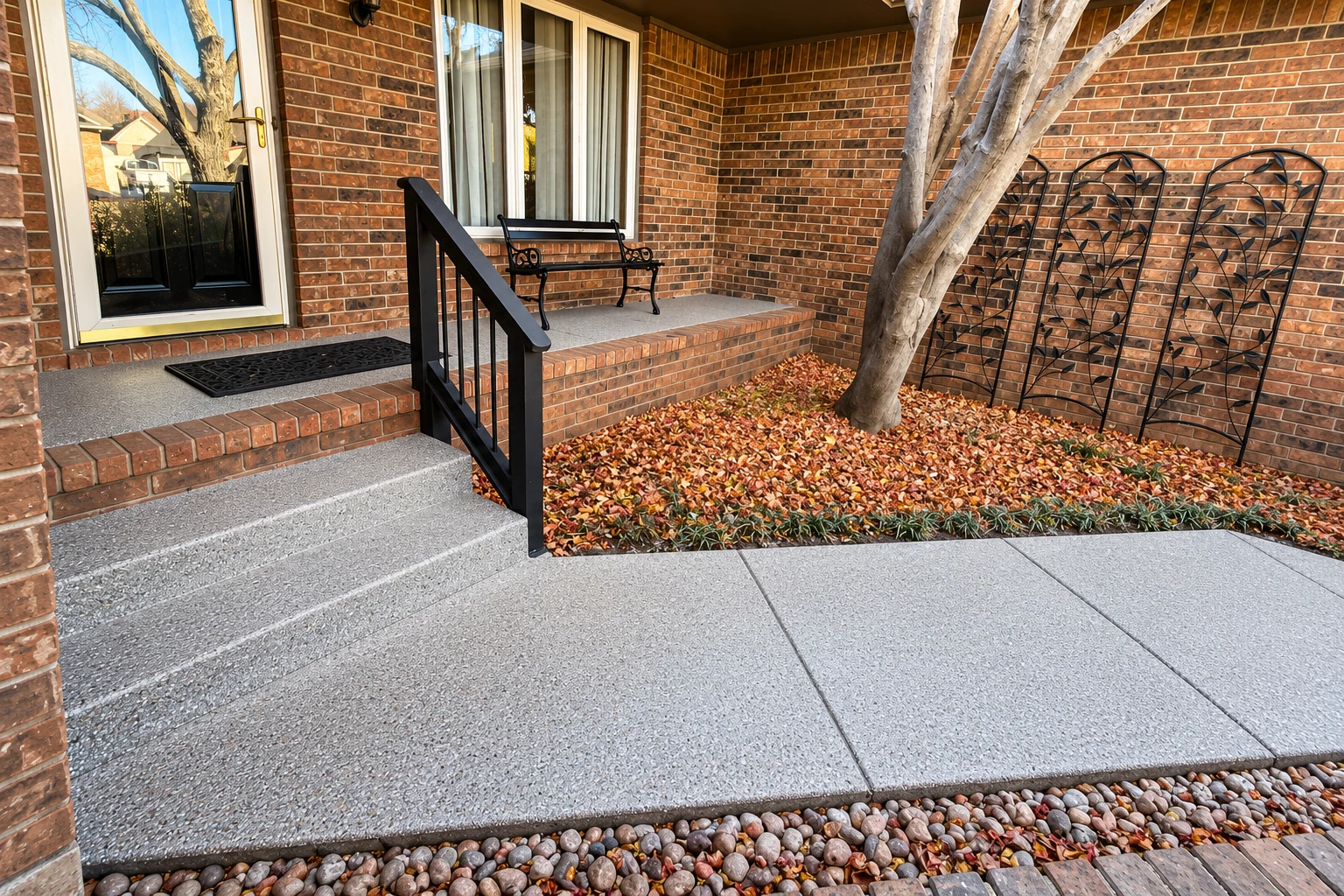
Decorative concrete in Hermiston means adding color to a patio, walk or driveway, either mixed in at the ready-mix plant as integral color or worked into the fresh surface by our finishers as color hardener. The method you pick shapes how even the color looks and how the surface stands up to weather and wear.
Most people who call about this already have a slab in mind and a color they like, and they want to know what it'll take. The price mostly turns on how big the area is, which color method you choose, since hardener takes more finishing time, and how much digging out and base work the ground needs. The schedule turns on the weather, on getting a colored load from the plant, and on a city permit if the work reaches the sidewalk or street. The state generally requires anyone paid to build on your property to be licensed, and we're licensed and insured and take care of the permits and city paperwork our part of the job calls for. I walk the job, measure it and write up what it needs, so the estimate gives you a number for your own slab.
I come out, walk the job and measure it, then I'm on site running it while my crew does the work, so the person who made the plan is there for the pour.
We dig out and pack the base, cut the joints on time and let the slab cure, because the color only looks good as long as the slab under it holds.
If plain concrete or a simpler color method suits your job better, I'll tell you, because I'd rather sell you what the slab needs than something extra.
First I sit down with you on color, since it's the part everyone notices, and we talk through mixing it in at the plant versus working it into the surface, and how even each one tends to look. Then our crew digs out to the subgrade, the soil the slab sits on, and packs a firm base so the slab doesn't settle with the dirt. We set the forms with a slope that sheds water away from your house so the color isn't sitting wet after every rain, and we lay rebar, the steel that holds the slab together, where the job calls for it. We pour early in the day because midday heat can leave a weak, dusty top, work in the hardener during finishing if that's what you chose, and cut control joints, grooves that give any cracking a place we picked. Then the slab cures, the wait while it gains strength, and I'll tell you when it's ready to walk on and when it can take a car.
Decorative work often ties into other jobs around the yard. If a colored patio sits against a slope, a concrete retaining wall can hold the grade and frame the space, and we plan the color for both at once. Indoors, our concrete floor installation work can carry the same color choices onto a shop, garage or basement slab.
A patio is where color earns its keep, since you look at it every day. We pitch it away from the house so rain runs off instead of pooling against the wall.
An entry walk is the first thing visitors see, and a crack there stands out. We lay out the joints to fit the design so any crack falls in a groove.
On a big pour, how even the color looks matters more because there's more of it. We go over how each method behaves at that size before we order anything.
We're based in Hermiston and pour in Umatilla, Pendleton, Kennewick and other cities around the area. If a project isn't clear cut, we check with the local permit office before we start.
Send the form and we'll get back to you within one business day to set a time. I come out, walk the job, measure it and write up what it needs, free and with no obligation.
A ballpark length and width, or a comparison like a two-car garage, lets me plan the visit and think ahead about the base work and how much color it'll take.
A photo, a paint chip or just a word like warm or earthy helps us talk through whether integral color or hardener gets you closer to what you're picturing.
Tell us if the work touches the sidewalk, road or ditch, because that brings in a city permit and changes the timing before we can start.
These photos show colors, finishes and layouts on patios, walks and walls, examples you can point at when we talk about your job.
Straight answers to what homeowners ask us about cost, color choices, permits and looking after new colored concrete.
Installing stamped concrete across the US usually costs about $26 to $31 per square foot, and that's a national figure for stamped work, not our price. Your number turns on the size, the color method and how much base work the ground needs. The estimate is free and I write it on site. Satisfaction guaranteed on every job.
Either can work, and one maker's guide lays out the difference. Integral color, mixed in at the plant, takes less finishing work but shifts more with the mix, so it's harder to keep even on a big pour. Color hardener, worked into the top, takes more time and finisher skill, and done poorly it can peel away later. We'll talk through which suits your slab.
Yes, the city requires a right-of-way permit any time someone works in the road, along the sidewalk, on the shoulder or in the ditch. Whoever takes it out is responsible to the city for doing the work correctly, so we agree on that up front, and we handle the permits our part calls for. Questions go to the Hermiston Building Department at (541) 667-5025, option 2.
Industry guidance says to skip deicing chemicals the first winter and use them in moderate amounts after that. An Ohio concrete group adds that water should drain off the slab, since soaked concrete that freezes and thaws is prone to surface damage, which is why we settle the slope while planning. If you're pouring late in the year, plan that winter's care from the start.
The city requires a blowing dust control plan before any work begins on residential or commercial construction, naming someone who can control dust at any hour or come out when the city calls. Anyone doing business in the city also needs a city business license. We get that paperwork in place before we start, so nobody gets a surprise from the city halfway through.
It can be repaired, but industry guidance says repair material won't match the color and character of the original, so on colored concrete a patch shows. That's why we put the work into the base, the joints and the cure, and why first-winter care is worth the trouble. Getting it right on the pour beats living with a mismatched patch.
Call (458) 219-6758 or use the form, since color and slope get decided before the pour, and an early look leaves more room for both.